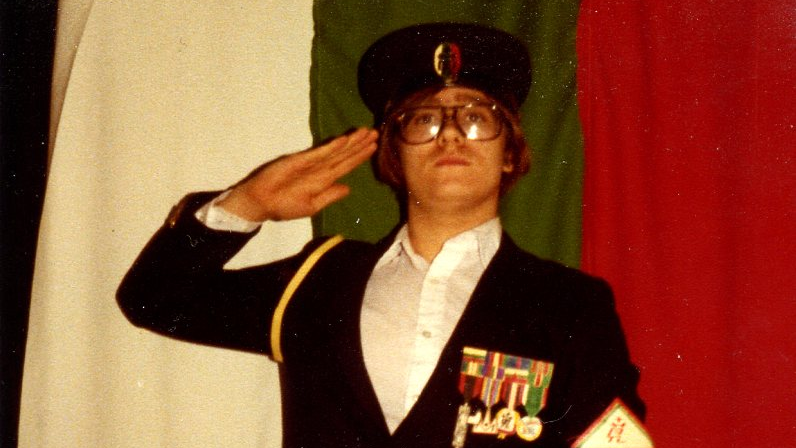
Begin where the trouble began, because the video published this week on the YouTube channel of the Grand Duchy of Westarctica does not.
In June 2025 His Imperial Majesty Aggelos I Augustus announced a general election, to be held on 20 July, arising from his personal dissatisfaction with his Prime Minister. He had no authority to do it. The Elections Act 2020 places the calling of elections beyond the reach of the Crown, and both the Prime Minister and the Speaker of the House, Lady Addinson O’Halloran, said so at once. Parliament declared the announcement null and void. The Emperor’s response to being told that the law did not permit his course was to purport to suspend the operation of Parliament itself.
That is the whole origin of the present division, and it is worth being precise about what it was. It was not a policy dispute, nor a personality clash that got out of hand, nor a disagreement about the direction of the Empire on which reasonable Austenasians might differ. It was a Monarch attempting to set aside a statute that bound him, and then attempting to set aside the legislature that had passed it. Every subsequent event in this country’s history proceeds from that single act.
What Lord Andrew did, and why
Lord Andrew Musgrave did not seek what followed. He was the object of the Emperor’s dissatisfaction, not the author of the crisis, and the Regency that came to him was a burden rather than a prize.
Take first the claim the video makes about him, because it is the exact inversion of what happened. He is described as a former prime minister voted out by a democratic parliament at the culmination of a constitutional crisis of his own making. He was not voted out. The vote that was supposed to remove him was the unlawful act itself: an election called by a Monarch who had no power to call one, announced because that Monarch was dissatisfied with his Prime Minister. Parliament did not remove Lord Andrew. Parliament sided with him, declared the Emperor’s announcement null and void, and was suspended for its trouble. To describe the man whom the legislature defended as the man the legislature ejected is not a matter of interpretation. It is the record reversed.
He has never since been removed by any lawful process, and he has not left. He was Prime Minister in June 2025 and he is Prime Minister today, which is rather the point: the continuity the founders say resides in a house in Carshalton in fact resides in an office that has been lawfully occupied without interruption throughout. In July he announced a new Cabinet, the first ministerial appointments since June 2025, restructuring the government into fewer and broader departments. In August the Count of Maritimae, Home Secretary from 2021 to 2022 under two prime ministers, was appointed Attorney General. These are the acts of an administration doing its ordinary work under a Constitution in force, and they are dull precisely in the way that functioning government is dull.
Then consider what he did with power when he had it in its most concentrated form. The Regency made him Lord Protector, and the Regency was open-ended, because the condition that produced it, the impossibility of resuming normal constitutional government under the 2011 order, was not going to resolve itself. On the accession of Johannes Karl I Augustus he transferred the powers of the Regency to the new Emperor and laid down the title, closing the Interregnum. A man interested in what he is accused of wanting would have found reasons to hold on; the reasons were readily available and he declined to use them. I regard that single act as the most eloquent answer to the video that exists, and it was performed a month before the video was made.
The same test applies to the trademark, and it is the test that matters most, because the mark is the one instrument in this affair that has genuine force outside the Empire. Lord Andrew obtained the registration of AUSTENASIA in the United Kingdom and he holds it. The register does not grant marks to people who merely feel entitled to them; securing it took the work of securing it, and it was done to protect the Empire’s name from commercial misuse rather than to win an argument on the internet.
What has he done with it? Less than he could, and less than the founders’ account of him would predict. He has enforced it on several occasions, and I will not pretend otherwise; but he has enforced it only where enforcement was strictly legally necessary, which is a narrower thing than it sounds and worth explaining, because the video’s audience will not know it.
A registered mark is not a trophy that sits in a drawer. It is a right that decays if it is not policed. A proprietor who watches others use his mark and does nothing does not thereby prove his good nature; he weakens the distinctiveness of the registration and, in time, may lose it altogether. The choice before Lord Andrew has never been between enforcing and refraining. It has been between enforcing where the law requires it and surrendering the Empire’s name to whoever cares to take it, including in time people with no connection to any Austenasia and a commercial interest in the word. Every instance of enforcement has fallen within that compulsion. None has been an act of retaliation, and the difference is visible in how little has followed from any of them.
Set against that the concession he actually made. In the Two Austenasias proposal he offered to bind himself: an undertaking not to enforce the mark against the other faction at all, so long as they kept clear of the Empire’s commercial affairs, with enforcement reserved only as a last resort should that line be crossed. That was a real limitation on a real right, offered by the man who holds it. What he asked for it was acknowledgement and an end to the harassment: a legally enforceable protection, offered in exchange for ordinary civility. It was refused.
Judge the founders’ account of Lord Andrew against that record. A man who wanted the Empire for himself does not hand back a regency, and a man who wanted to destroy his opponents does not offer, unprompted, to disarm. He acted as he did not in opposition to Austenasia and not in anger at it, but because of what Austenasia is supposed to mean. An Empire whose statutes bind its Emperor is worth defending precisely at the moment its Emperor decides they do not. To have done nothing in June 2025 would have been the disloyal course, because it would have conceded that the Constitution was decorative, and a decorative constitution is what the founders’ argument now amounts to, seventeen years after they wrote one.
Why the Prime Minister offered terms anyway
That is also the light in which to read the Two Austenasias proposal of 26 July, and it is the part of this affair the video passes over in silence.
The Prime Minister could have treated the Discordenasians as adversaries to be defeated. He did not. He wrote to them as friends across the aisle, argued that neither faction can claim to embody the original vision entire, offered mutual acknowledgement of each other’s existence without recognition of each other’s claim, asked for an end to campaigns of delegitimisation and to harassment, and undertook not to enforce the Empire’s registered trademark against them so long as they stayed clear of its commercial affairs. That last concession was real, and the price set on it was slight. Nothing was demanded that the other faction could not have granted the same afternoon, and nothing was demanded that it should have found humiliating to grant.
The reason for such generosity is the one that ought to govern this entire dispute. The other faction has violated the spirit of Austenasia, repeatedly, and violates it still, but it has not done so out of malice. It has done so because its members sincerely, and wrongly, believe themselves to be in the right. That is an error, and errors made in good faith are answered with terms rather than with lawyers. The proposal was rejected on their behalf by John Gordon within days.
And now the video
I have dealt already with what the video says about the Prime Minister. Take now the rest of what Jonathan and Terry Austen have chosen to say. It is short, it is courteously delivered, and I have no wish to answer courtesy with abuse. It nevertheless requires a reply, because its claims of fact are wrong and its argument is not an argument. It is also, as I shall come to, a very old mistake rather than a new one.
That argument is proprietary. The name, the symbols, the concept, the intellectual property, the copyright: almost every sentence concerns who was given leave to use a word, and almost none concerns who governs. The founders say they granted no such leave, and I do not doubt them. But permission was never the question. AUSTENASIA is a registered trademark, obtained by the Empire’s Prime Minister and held for the Empire’s use, and a registration does not ask after anyone’s blessing.
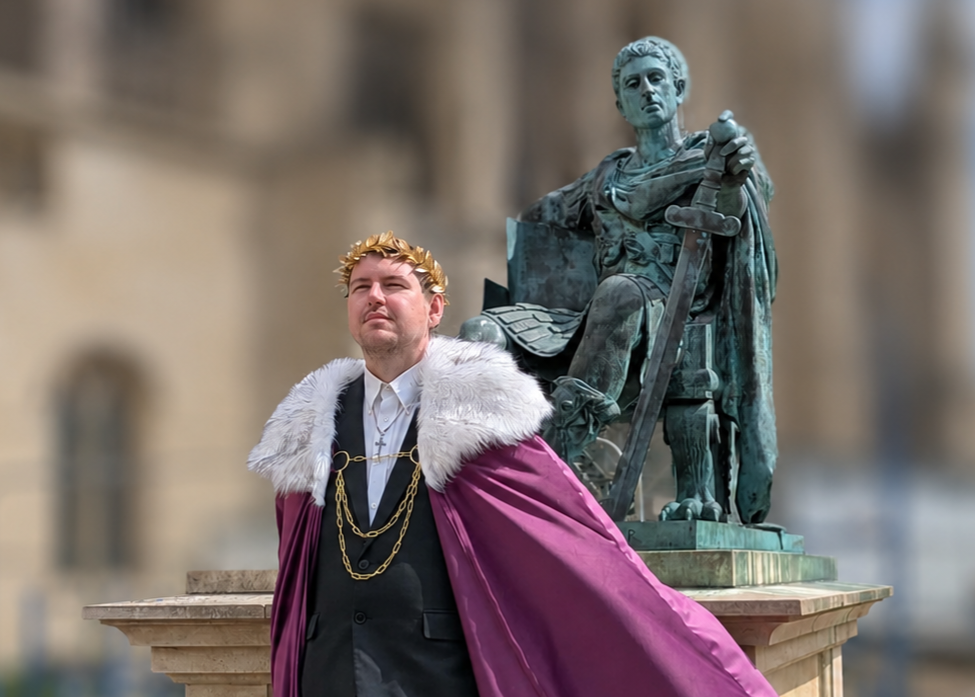
The video’s explanation for the coronation’s location, that the Government went to York because it could not go to Wrythe, is untrue, and the record was public before the video was recorded. The coronation fell on 25 July 2026 because that was the one thousand seven hundred and twentieth anniversary of the proclamation of Constantine the Great as Augustus in that same city, on 25 July 306. Date and city were chosen together and for one another. A venue selected eighteen centuries in advance is not a fallback.
The argument from Wrythe
The deeper trouble is that the objection would fail even if the account of it were true, because Wrythe carries none of the weight placed upon it.
Wrythe was a Town of the Empire: a creature of Austenasian law, holding its status by grant of the state that named it. Towns are constituted by the Empire; they do not constitute the Empire. To say that a coronation held outside Wrythe cannot make an Emperor is to hold that the grant is greater than the grantor, which is not a constitutional argument but an inversion of one.
Nor does the present settlement leave room for the claim. The Constitution of 2026 is not an amendment of the Constitution of 2011 but its replacement, drawing its authority from that instrument’s own provision for the alteration of the fundamental law in a time of great crisis and existential threat; a provision the Crisis and the Interregnum activated in the plainest terms available, since normal constitutional government under the 2011 order could not be resumed and has not been. Under the settlement that followed, the institutions of the Empire continue in being without interruption: the offices, the Towns, the honours, the titles, the laws. What does not continue is their dependence. They hold their authority from the present Constitution and from nothing before it. There is no residue of the old order left over for anyone to inherit, and nothing in Austenasia now stands on 2011, on 2008, or on any address in the London Borough of Sutton.
The Roman precedent the founders themselves spent eighteen years invoking says the same thing more elegantly. Rome was Rome from Milan, from Nicomedia, from Ravenna and from Constantinople; the imperium travelled with the state, not with the walls. Constantine was proclaimed Augustus at York, five hundred miles from the Forum, and nobody has since thought it made him less Augustus.
The question of recognition
The video invites its audience to believe that the recognised Government is a website with no standing in the wider community. The community’s own record says otherwise, and it says so in the form that counts for most in this hobby: sovereigns of other realms, under no obligation to either party, have weighed the two claims and acted.
The Angle-Saxish Kingdom is the plainest case. Its King did not send a message of congratulation; he took the Austenasian Throne itself, and reigns today as Johannes Karl I Augustus in personal union with his own Kingdom, the two realms remaining distinct and independent constitutional entities with their own institutions and laws. The Empire of Hortania is the second: its Emperor is the Crown Prince of Austenasia, recognised as heir by His Imperial Majesty at the coronation and subject to the approval of the Senate. Neither man arrived empty-handed and neither was obliged to arrive at all. A reigning sovereign does not attach his own crown to something he believes to be a fabrication, and the decision to do so is a judgement about which Austenasia is the real one, made by people with everything to lose by getting it wrong.
To this it will be objected that these are Austenasians recognising Austenasia. They were not Austenasians when they decided. The recognition came first and the union followed from it; that is the order of events, and it is the opposite of the circularity the objection imagines.
The Confederation of Mahuset has recognised this throne without equivocation. Its Lord-Stadtholder congratulated Johannes Karl I on his coronation and reaffirmed the Confederation’s recognition of it, and has conferred the Chad upon him. The editorial staff of the Courant van Lazia, Mahuset’s paper of record, have since put the rival government’s central assertions to a published fact-check and examined them item by item (the succession, the throne, the claim that austenasia.org is the only endorsed website, the claim that this Government has ceased to exist), finding for this Government on each. A foreign newspaper does not devote that kind of attention to a domain name with nobody behind it.
Nor, in the end, is the video itself consistent with its own thesis. The Grand Duke tells us that he had been on the verge of granting full recognition to this Government, and that he took a long call with each side before deciding to mediate between them. One does not mediate between a nation and a fiction. The premise of his own good offices is that there are two parties here, which is precisely what the Austens have spent the preceding minutes denying.
What the other side does have
It would be a poor article that put the case only one way, so here is the other faction’s best point, which the video does not make for itself.
When the Empire divided, a substantial number of Austenasian subjects stayed with the opposed government. That is a fact, it is not a small one, and nobody on this side has pretended otherwise. Micronational legitimacy as the community actually practises it, rather than as constitutions describe it, has always been largely a question of who is claimed by whom; a body of people who think of themselves as Austenasian and think that government theirs is not nothing. It gives the other faction a genuine claim of that particular kind. I would put it no higher than weak, since adherence gathered in the middle of a constitutional crisis, on the strength of an account its recipients had no ready means of checking, is a soft foundation. But weak is not absent, and I see no reason to pretend it is.
Two things follow from that and nothing else does. The first is that it is a claim of one kind only. It is not a claim to the Constitution, to the succession, to the registered mark, or to the proposition that the Empire is anybody’s property, and adherence does not convert into any of them; every argument set out above stands exactly where it stood. The second is that it is not a claim this side is competing for. There is no interest here in an auction over who can count the most subjects, and no intention of entering one.
The concession costs nothing, because it was never the thing in dispute.
A note on the record
One practical matter, stated once and then left alone.
Persons associated with this Government remain barred from MicroWiki and the platforms attached to it, on grounds that were thin when they were given and have not improved with keeping. I do not propose to argue about it here. It is somebody else’s website, run by people entitled to run it as they see fit; nobody is owed an account anywhere, and an editorial that spent its length aggrieved about a forum ban would deserve exactly the reading it got.
The consequence is worth a sentence, though, because it bears on what readers elsewhere are being shown. The most widely read account of this dispute is being assembled on a platform from which one of the two parties is absent, and it reads like it. Assertions about the Empire, its Government and the people in it stand uncorrected because the only people placed to correct them cannot post. Some of that material is merely inaccurate. Some of it is inaccurate in ways that would be actionable if anybody thought the trouble worth taking, and a fair amount of it is written in a register that those doing the writing would not tolerate if it were aimed at them.
I raise it for one reason only. A reader who finds the account given in this article unfamiliar might ask where the familiar version was written, and who was permitted in the room while it was being written.
Talossa did this first
Here, then, is the old mistake. The argument that a nation belongs to those who began it, and may be recalled by them, has been made before and tested to destruction; and it was made by the man who gave this community its name.
Robert Ben Madison declared his second-floor bedroom on Milwaukee’s east side independent of the United States in December 1979, at the age of fourteen, and called it Talossa. He coined the word “micronationalism” some fifteen years later. Nothing in what follows should be taken to diminish him: he built the Talossan language into a Romance tongue of some thirty-five thousand words, wrote a body of law, and gave the hobby both its name and one of its few genuinely serious cultural achievements. He was not a fraud. He was a founder, and it is precisely because he was a real one that his case is worth putting to Jonathan and Terry Austen.
Talossa outgrew him, as these things do. Citizens arrived whom he had not chosen and who did not defer as he expected. In 2004, while he was away, the leaders of four of Talossa’s seven provinces seceded and founded a Republic, issuing a statement that called their King a tyrant. In 2005 the quarrel turned on immigration: the Kingdom’s immigration minister had admitted a body of new citizens, Madison held the admissions unlawful, and he litigated. He lost. The court’s reasoning is the passage every founder in this hobby ought to read once a year: that Talossan governance had been conducted in an ad hoc manner from the very beginning, and that the founder could not now invoke against others a standard his own founding had never met.
What he did next is the part that concerns us. He abdicated on 16 August 2005, passing the crown under a law he had himself written to his wife’s eight-year-old grandson; he renounced his citizenship; and he declared that Talossa no longer existed. His subjects, told by decree that their country had ceased to be, simply declined to accept it and carried on. The Kingdom then amended its Organic Law to bind the monarchy against exactly the abuses that had driven people out. In 2007 Madison and a handful who had left with him announced that they were the real Talossa, under a constitution containing what he himself called an “authoritarian gimmick”, the purpose of which was to ensure that the democratic vote of the citizens could never overrule his vision. That entity struggled to sustain any activity and abolished itself on 4 July 2011. When he applied to become a Talossan again in 2019, the application was refused; the fact is recorded, as it happens, in Westarctica’s own encyclopaedia.
Note what did not save him, because each item has an analogue in the video. Being the founder did not save him. Being demonstrably in the right about some of the particulars did not save him; he probably was right about the citizenships. Having the language, the lexicon, the archive and the entire early history on his side did not save him. Declaring the other Talossa unreal did not make it so, and declaring his own the real one did not make it live. He held every card the Austens now hold and several they do not, and the polity went on without him regardless, because a polity is the people currently doing the work of it and cannot be recalled by the person who started it.
I do not say the parallel is exact, and I impute to the Austens none of the conduct that broke Talossa. I say that the founder’s error has a shape, that the shape recurs, and that it is visible here: the conviction that the nation is wherever the founder is standing, that those who kept it running are usurpers, and that a declaration from outside can unmake what continues to function inside.
The parallel has one further limb, and it is the closest of them. Madison abdicated, renounced his citizenship, and discovered that his authority had gone with the act. Jonathan Austen did the same thing, more deliberately and with a good deal more grace. On 30 April 2024, having spent more than half his life leading Austenasia as Prime Minister and then as Monarch, he announced that he wished to step down. He did not abdicate at once: after discussion with the Privy Council and the Senate a Regency was instituted instead, expressly so that he might return to power should he wish to. He was given the door and he was given the key. He chose not to use them, and on 29 September 2024 he abdicated in favour of Aggelos I.
Whatever lawful authority he still held went with that decision, because that is what abdication is. It is not a leave of absence. It cannot be performed in part, it cannot be conditioned on the successor turning out well, and it cannot be recalled two years later by video. Every power Jonathan Austen holds in Austenasia today he holds because the Empire has since chosen to give it to him, which is the ordinary position of every other subject and no cause for complaint.
There is more, and it ought to end the argument outright. Among the reforms of his final period, Jonathan Austen asked the Senate, as Emperor, to change the Line of Succession from a hereditary basis to a meritocratic one, and the Senate did as he asked. The effect, which was the effect he sought, was that members of the Imperial Family ceased to be in line to the Throne at all. The founder’s last constitutional act of substance was to sever his own family’s claim upon the Empire he founded. The proposition that Austenasia belongs to the Austens does not need denying by me. It was denied by Jonathan Austen, in law, at his own request, and it is his signature on it.
The legacy, and who is keeping it
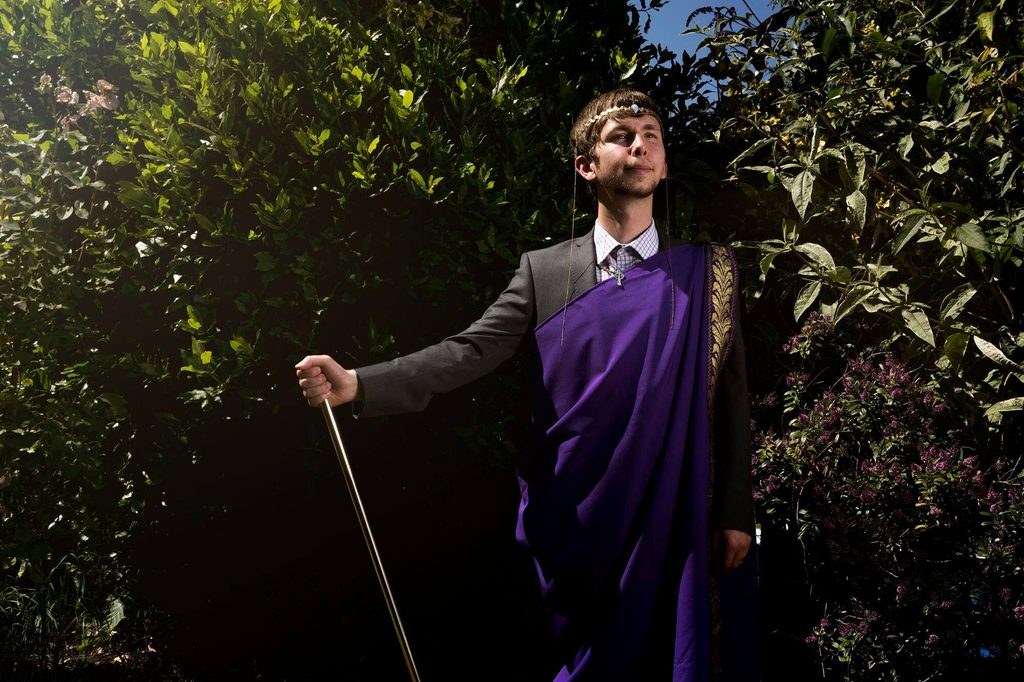
Let there be no doubt about how the man is regarded in Austenasia, because the framing of the video invites readers to assume the worst.
Jonathan Austen founded the Empire. He was Prime Minister to three Monarchs before becoming one himself, and then reigned longer than any Austenasian Emperor before or since. He brought in most of the Towns, Marches, Territories and Crown Dependencies the Empire has ever held. He built its foreign relations from nothing, carried it to a position of real standing in the wider community, and gave the better part of two decades to the work. When he abdicated in 2024 the Austenasian Times published a celebration of his reign, and Lord Andrew Musgrave, the same Prime Minister the video now writes off as a stranger to the Empire, spoke of him not as a predecessor but as a friend. Not one word of that has been withdrawn, and none of it will be. The regard is not conditional on his agreeing with us.
I will go further, at the risk of impertinence. Austenasia’s respect for Jonathan Austen’s legacy is at present higher than his own. The Empire he actually built was one in which the Constitution bound the Crown, in which the Elections Act meant what it said even when an Emperor found it inconvenient, in which succession ran on merit rather than blood, and in which the state was self-evidently larger than the family that started it. That is the Austenasia this Government defended in June 2025 and defends now. The Austenasia argued for in the video is a much smaller thing (a name, a house, a family’s possession), and it is precisely the thing Jonathan Austen spent his reign legislating away from.
Austenasia is keeping faith with what he built, and would be glad of his company in it.
How the Talossan schism ended
Let me return to Talossa a last time, because its story has a second half and the second half is the one that matters. The Kingdom and the Republic, having spent years in mutual denunciation, reunited in April 2012. The Republic was dissolved, its citizens became citizens of the Kingdom, and a new province was created expressly to carry the republican tradition forward rather than bury it. What made that possible, by the account of those who did it, was not that either side won the argument. It was that both sides grew tired of stagnation and chose pragmatism over vindication. The schism ended when the participants decided it had cost more than it was worth.
That is available here, and it is available now, on better terms and after far less damage.
What remains open
The mediation now offered is welcome, and the Grand Duke’s own observation in that same video, that claiming a title to which one has no legal right is the ordinary condition of the micronationalist and that this has never stopped any of us, is the truest thing said in it. It also dissolves the case it was placed beside. Legal right cannot be decisive when the founders invoke it and irrelevant when everybody else does.
The Two Austenasias proposal was refused in July, and the Austenasian Times has broken its silence on the matter to correct a factual account rather than to relitigate that refusal. It should not be inferred from this, however, that the offer died with it. My understanding of the Government’s position is that the policy would be considered again, and considered seriously, if the other faction were willing to sit down and discuss it in earnest. What was declined in July was a document. What has never been withdrawn is the willingness behind it, and the conviction that these two communities have more to gain from one another than from another year of this.
For my own part, I want to thank the Grand Duke of Westarctica for the spirit in which he has approached this. It would have been easier for him to pick a side, or to stay out of it altogether; he did neither, and that deserves saying plainly rather than in passing. I would be glad to see his good offices put to a mutually acceptable settlement on terms of the kind the Prime Minister set out in July: mutual acknowledgement, an end to campaigns of delegitimisation, an end to harassment, and forbearance where forbearance is lawfully possible. I cannot commit the Government and I will not pretend to. I can say that I have yet to meet an Austenasian who wants another year of this, and that if the Grand Duke is willing to carry such terms between the parties, he is unlikely to find this side unwilling to listen.
A name can be registered. A town can be founded. Neither is the same thing as a country, and it is the country that is at issue, the one subject the video never raises. Talossa took eight years to work that out. I would rather we did not need eight.
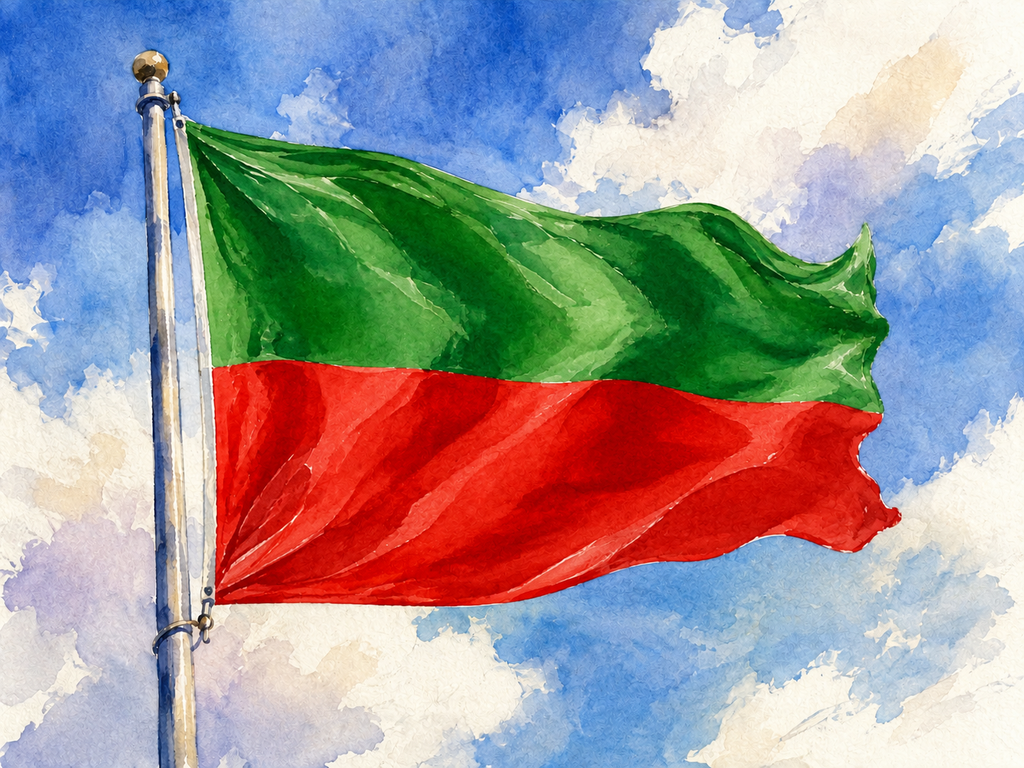
Correction, 27 August 2026: an earlier version of this article was illustrated with the Talossan war flag rather than the national flag. The image has been replaced.
This article is an opinion piece. The views expressed in it are my own personal views. They are not the views of the Empire of Austenasia or its Government, of the Austenasian Times, or of any other body or entity with which I am associated, and nothing in it should be read as an official statement by or on behalf of any of them.